






Preparing for the Return Home and Your New Routine with Your Partner
Going home after the birth can be one of the most symbolic moments of the postpartum period. Prepare for it in the best possible way.
Read more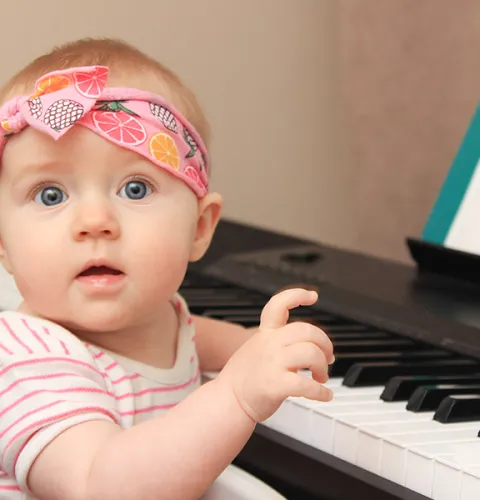
Listening to music with children is always a delightful and joyful experience! Early contact with this art form stimulates your child's ability to learn. Singing and playing instruments stimulates areas of the brain that will later be used for other functions – such as maths calculations or reading texts, for example.
It all begins with the musical awareness stage: in a playful way, without formal learning, the child develops auditory perception. Through this stimulation, the child begins to notice the difference between a high-pitched and a low-pitched sound and also starts to recognise patterns and rhythms. This perception is only possible because the area of the brain responsible for hearing, the auditory cortex, is being stimulated. In addition, listening to a song works on motor coordination, as your child will feel the rhythm and reproduce it with body movements – those dance steps that delight the whole family!
When children see that their parents value and appreciate this art form, they also begin to enjoy it. Presenting a song in an artificial way won't have the same effect – the introduction needs to be playful! Buying small musical instruments or using everyday objects to make sounds, such as spoons and saucepans, and dancing are creative ways to introduce your baby to music in a fun way.
But it's important to take some precautions:
use a moderate volume, as the child's hearing is not yet fully mature.
choose a rhythm suited to the age group – a baby will prefer something calmer, such as classical music or a gentler song.
According to Izabel Martins Alves, paediatric physiotherapist and psychomotor therapist, “music promotes integration between body and mind, between the sensory and the motor, contributing to communication and body awareness in babies and children, as well as being fundamental to the development of motor coordination". Izabel also highlights that: “motor coordination is strongly influenced by music, as the child learns to coordinate body movements according to the different rhythms that music provides. Toy musical instruments spark the child's curiosity and should be introduced early on. Besides the many models you can find in shops, the most interesting ones are those made from objects that are part of the child's routine, such as wooden spoons, saucepans, bowls and buckets. Plastic bottles can become rattles with different sounds and colours".
Shall we start listening to music and making sounds with your baby? Which objects do you use to play and make music?
Article written by the Mamãs Sem Dúvidas Team
Going home after the birth can be one of the most symbolic moments of the postpartum period. Prepare for it in the best possible way.
Read more
Breastfeeding after breast cancer is, above all, a story of hope. It is about believing once again in the strength that lives within every woman.
Read more
Comments (0)
Be the first to comment on this article.