






Postnatal Mental Health: Recognising the Signs and Taking Care
An article by clinical psychologist Ana Beatriz Sousa explaining the importance of mental health after giving birth.
Read more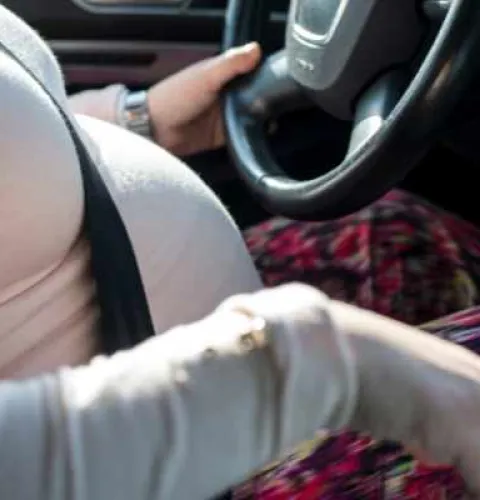
On European Road Safety Day, we reflect on a topic that is so often overlooked, yet hugely important for the health of mother and baby: car safety during pregnancy.
As a society, we have made progress in protecting those who travel with us. However, when it comes to pregnant women and unborn babies, myths and practices persist that put lives at risk.
In this article, we debunk misconceptions, explain good practice and highlight what should be avoided.
“The seatbelt hurts the baby” – A dangerous myth
It is a common belief: “If I'm pregnant, the seatbelt could hurt the baby”. But this idea is false and dangerous.
The World Health Organization (WHO) and the American Academy of Pediatrics (AAP) are clear:
“Correct use of the seatbelt significantly reduces the risk of foetal death or serious injury in the event of an accident.”
In other words, not wearing a seatbelt is far more dangerous. In a collision, the mother's body can be thrown forward violently, and the force of the impact is transmitted to the uterus. The seatbelt is the main protective barrier.
How do you wear a seatbelt correctly during pregnancy?
The three-point seatbelt should always be worn – whether you are driving or a passenger. But how it is positioned makes all the difference:
The lower (lap) strap should sit below the bump, fitted snugly across the bony part of the pelvis.
The upper (diagonal) strap should go between the breasts and to the side of the bump, resting on the shoulder, never across the neck or the uterus.
The seatbelt should be snug but comfortable – with no slack.
Seatbelt adapters: useful, but with rules
There are various seatbelt positioners for pregnant women on the market. Their job is to stop the lower strap from riding up onto the bump – which can happen without you noticing, especially in the third trimester.
However, not all products are safe.
“A non-approved adapter can be more dangerous than using nothing at all.”
You should only choose models that have been tested and approved under European standards (such as ECE R16). Uncertified products can compromise how the original seatbelt works and even make the consequences of an accident worse.
Driving or being driven: the risk is the same
Many pregnant women assume that, as passengers, they are better protected. That is not true. In an accident, injuries are similarly severe if a seatbelt is not worn.
In addition, these extra safety recommendations should be followed:
Keep the seat back as upright as possible.
The steering wheel should be at least 25 cm from the bump and, if possible, pointed at the breastbone, not the abdomen.
Avoid long journeys in the last trimester, taking regular breaks and drinking plenty of water.
Your baby's safety begins before birth
Every precaution is a way of protecting the future. Taking care of road safety in pregnancy is caring for who's on the way, with knowledge, responsibility and love.
On this European Road Safety Day, we make a clear appeal:
Wear your seatbelt. Wear it properly. Wear it always.
Because some lives begin long before birth – and every decision counts.
Article written by Isabel Costa de Sousa, The Baby Planner
An article by clinical psychologist Ana Beatriz Sousa explaining the importance of mental health after giving birth.
Read more
Getting back into exercise after giving birth can be a challenge. This article answers the most common questions.
Read more
Comments (0)
Be the first to comment on this article.