




Preparing for the Return Home and Your New Routine with Your Partner
Going home after the birth can be one of the most symbolic moments of the postpartum period. Prepare for it in the best possible way.
Read more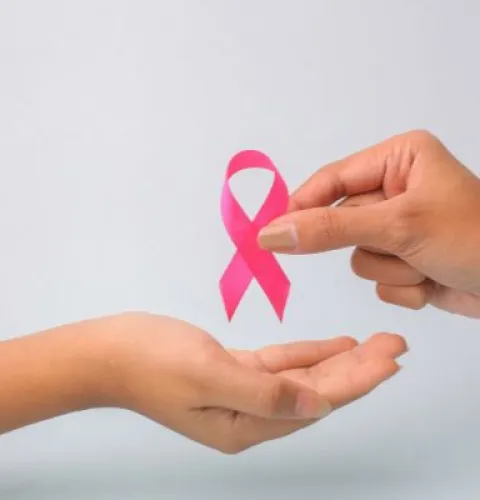
Breastfeeding is an act of love and trust. But when a woman has been through breast cancer, this gesture takes on an even deeper meaning — one made of courage, hope and reconnecting with her own body.
For a long time, it was believed that breastfeeding after breast cancer would be impossible. Scars, the effects of treatment and the fear of recurrence seemed to rule it out. However, scientific evidence has changed this view: in many cases, breastfeeding is both possible and safe.
Guidance from the World Health Organization (WHO) and the Academy of Breastfeeding Medicine (ABM) states that women who are clinically stable and not in active treatment can breastfeed safely, provided they receive specialist support.
The American Cancer Society confirms that breastfeeding after breast cancer does not increase the risk of recurrence or of a new tumour.
Recent studies presented at the European oncology congress (ESMO, 2024) confirmed that women who breastfed after cancer did not have more recurrences than those who did not.
The ability to breastfeed depends on each woman's history and on how her body responded to treatment.
Some women produce milk in both breasts, some in only one, and some have a lower supply. What matters is understanding that there are several ways to give breast milk to your baby — whether by breastfeeding directly, by hand expressing, by pumping or by combining these.
The key is to preserve, whenever possible, breast milk and the bond between mother and baby. More than a biological process, breastfeeding after breast cancer is an act of resilience and trust.
The breast, once a symbol of pain, becomes a place of life again. For many women, this moment represents a stage of emotional healing — reconnecting with their own body and celebrating their ability to keep nourishing and loving. Specialist support is crucial for this to happen.
Women who have had breast cancer benefit from an individualised approach, planned and supported by professionals specialised in breastfeeding.
The Academy of Breastfeeding Medicine recommends creating a personalised breastfeeding plan that respects each woman's health and wishes, offering solutions that favour breast milk whenever possible.
This plan should include clear information during pregnancy, practical support after birth and ongoing follow-up — from checking the latch to stimulating milk production. When needed, complementary strategies can be used, such as hand expressing or pumping, ensuring that the baby receives their own mother's milk.
Science shows that this kind of support makes a difference. A review published in PLOS One in 2020 concluded that most women who tried to breastfeed after breast cancer were able to do so, especially when they had professional support. Other studies add that, as well as being safe, breastfeeding in these circumstances has a positive impact on emotional wellbeing, strengthening confidence and the bond between mother and baby.
Breastfeeding after breast cancer is, above all, a story of hope. It is proof that the female body has an extraordinary capacity to regenerate and to keep caring.
Based on current evidence and on guidance from the WHO, the ABM and IBCLC consultants, it can be said that, with the right support, this is a real and safe possibility for many women.
As a nurse specialising in maternal and obstetric health and a breastfeeding consultant, I believe this topic should be discussed with sensitivity and honesty. No woman should be discouraged without knowing her options.
Every story is unique, and every woman deserves support, information and respect on whichever path she chooses. The body changes, but it is still capable.
Breastfeeding after breast cancer is not just about milk — it is about courage, trust and love. It is about believing once again in the strength that lives within every woman.
Opinion article by Filipa Ribeiro, MSc, Nurse Specialist in Maternal
and Obstetric Health and Breastfeeding Consultant
Going home after the birth can be one of the most symbolic moments of the postpartum period. Prepare for it in the best possible way.
Read more
The first thousand days of life are a unique window of opportunity to lay solid foundations for future health.
Read more
Comments (0)
Be the first to comment on this article.