






Preparing for the Return Home and Your New Routine with Your Partner
Going home after the birth can be one of the most symbolic moments of the postpartum period. Prepare for it in the best possible way.
Read more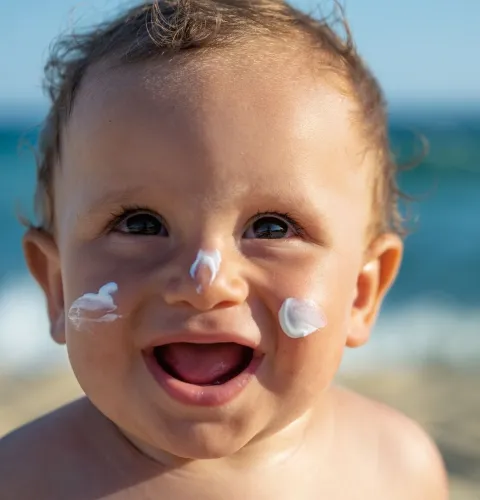
When we talk about a baby's skin, we need to take its particular features into account, as it needs different care from mature skin.
It is more sensitive and defenceless
After birth, a newborn's skin has a different pH from an adult's, as there is less fat supporting the skin and fewer sebaceous glands to moisturise it, making it very thin, delicate, sensitive, immature and less protected skin.
A baby's skin barrier is more fragile and more sensitive to external aggressors such as the weather, since the skin is very thin with little subcutaneous fat, and has weaker defences against cold and heat.
Melanin production is reduced
Although the number of melanocytes is the same as in adults, melanin activity is not yet established, because the skin is still immature.
Melanin is an intrinsic biological factor that protects us from solar radiation, which is why direct sun exposure is not recommended for babies under one year old.
The sun is also considered a positive extrinsic biological factor, as it allows us to synthesise vitamin D, which is why up to 15 minutes of indirect sun exposure a day is recommended while you take your baby out for a walk.
Things to keep in mind...
Up to the age of 3, fragrance-free SPF 50+ sunscreens with mineral filters are recommended, as these filters are well tolerated and safe, suitable for a baby's sensitive, immature skin, and also for babies with atopic dermatitis. Apply a generous layer to stop solar radiation getting through, and reapply every 2 hours and after every swim or bath.
After the age of 3, the skin has matured fully, as it is more permeable, so the recommended sunscreens become those with organic filters, which are more pleasant to use and come in many options to suit your preference, from sprays to lotions, but still fragrance-free. However, remember that SPF 50+ and reapplying every 2 hours are essential to protect your child and avoid the harmful effects of solar radiation, such as sunburn and skin cancer.
On the hottest days, remember that skin tends to become dehydrated, so take our thermal water with you: it is an excellent source of hydration and radiance, protecting the skin from pollution and free radicals, soothing sunburn and protecting cells from UV damage.
Protect your child during the hottest hours of the day, use a hat, stay in the shade and enjoy your holidays!
This summer, take care of yourself and your family!
Article written by Pharmacist Mariana Pinto de Sousa, Dermocosmetics Specialist at Uriage Dermatological Laboratories
Going home after the birth can be one of the most symbolic moments of the postpartum period. Prepare for it in the best possible way.
Read more
Breastfeeding after breast cancer is, above all, a story of hope. It is about believing once again in the strength that lives within every woman.
Read more
Comments (0)
Be the first to comment on this article.