






Preparing for the Return Home and Your New Routine with Your Partner
Going home after the birth can be one of the most symbolic moments of the postpartum period. Prepare for it in the best possible way.
Read more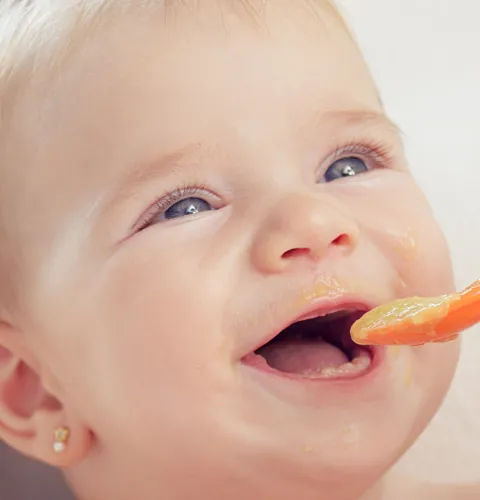
Introducing complementary feeding is a period of adapting to new foods, ideally in a gradual, unhurried way. Through this process, your baby goes from feeding exclusively on breast milk or formula to being able to join the rest of the family at the table (with adaptations, of course), at their own pace. On this point, it is important to stress that breast milk or formula will remain the main food until 12 months of age.
In recent years, the recommendations on complementary feeding have changed frequently, reflecting new findings from ongoing scientific research, and they are markedly different from the advice given to previous generations.
The current recommendation is that healthy babies start a varied diet from 6 months of age.
And why from 6 months? According to the WHO, to be able to eat foods other than milk, the body needs to have reached the necessary neurological, renal, gastrointestinal and immune maturity.
A baby is considered ready when they have acquired the psychomotor skills that allow them to handle and swallow food safely. As with any other developmental change, not all children will acquire these skills at the same time, although in general these changes tend to happen around the sixth month.
To know whether your baby is ready, they need to:
Hold a sitting position, with or without support.
Show an active interest in food.
Be able to pick up food with their hands and put it in their mouth.
Show signs that the extrusion reflex is disappearing (this shows when the baby involuntarily pushes their tongue out, avoiding swallowing anything other than milk).
We now know that it is important to recognise the signs that your baby is ready to start trying other foods, in line with their development, since not all children will acquire these abilities at exactly the same age.
Article written by Nurse Maria Fernandez, Baby Led Weaning Specialist
Going home after the birth can be one of the most symbolic moments of the postpartum period. Prepare for it in the best possible way.
Read more
Breastfeeding after breast cancer is, above all, a story of hope. It is about believing once again in the strength that lives within every woman.
Read more
Comments (0)
Be the first to comment on this article.