






Postnatal Mental Health: Recognising the Signs and Taking Care
An article by clinical psychologist Ana Beatriz Sousa explaining the importance of mental health after giving birth.
Read more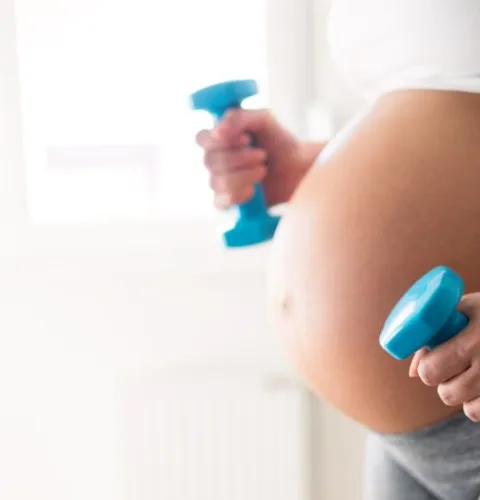
Pregnancy should not be seen as a state of endless limitations, and women with low-risk pregnancies should be encouraged to start or keep up physical activity.
Professionals increasingly recognise the benefits of physical activity during pregnancy and, with that in mind, they try more and more to promote a healthy lifestyle among pregnant women, advising them to include physical activity in their daily routine.
When should you start being physically active?
Every pregnant woman should ask her doctor for advice about physical activity, and if you were not active before pregnancy you should wait until 12 weeks before starting any activity. If you have always been active before pregnancy, you can carry on in the first trimester with the appropriate adjustments (always with your doctor's approval) and supervised by a specialist professional.
What are the main benefits?
Physical activity during pregnancy is very important and beneficial for you and your baby, both for a healthy pregnancy and to help you return to your pre-pregnancy body composition. Before starting an exercise programme, each woman's biological individuality and lifestyle must be taken into account, because a sedentary lifestyle before pregnancy and some medical conditions influence how training is prescribed.
For this reason, you should be supervised and advised by specialist professionals. The benefits of exercise during pregnancy include:
Improved overall fitness;
Better cardiovascular adaptation to the new haemodynamic situation;
Prevention of gestational diabetes and varicose veins;
Less weight gain and body fat;
Good posture during pregnancy and, as a result, prevention of lower back pain;
Improved self-image and self-confidence;
Quick postpartum recovery.
The main recommendations
Avoid lying in the supine position (on your back) after the first trimester. This position is associated with a reduced blood supply to the foetus.
You should also avoid standing still for long periods. Pregnant women have joint and ligament instability because of the hormone relaxin. One of this hormone's roles is to 'soften' the ligaments and joints, especially in the pelvic area, but it affects the whole body. This general loosening should be taken into account when exercising.
Hydration is always a concern, but during pregnancy it becomes crucial, as does a balanced diet for the wellbeing of mother and baby.
Physical activities that are not recommended are any that involve impact, risk of falling, diving or anything else that could pose a serious risk of trauma to you and your baby.
You should also avoid any kind of competitive activity because of physical contact between participants, even if you already do that activity.
When should you stop exercising?
You can stay active until the end of your pregnancy, but there are some warning signs that mean you should stop exercising:
Any sign of leaking amniotic fluid or vaginal bleeding;
Sudden swelling of the ankles, hands and face (generalised oedema);
Thrombophlebitis (swelling, pain and redness in the legs);
Temporary loss of vision, severe persistent headaches or dizziness.
Raised heart rate or blood pressure that persists after exercise;
Excessive tiredness, palpitations or chest pain;
Persistent contractions (more than 6 to 8 an hour) that could be related to the start of labour;
Insufficient weight gain (less than 1 kg a month during the 2nd and 3rd trimesters);
Abdominal pain with no apparent cause.
Absolute contraindications to exercise during pregnancy
Haemodynamically significant heart disease;
Restrictive lung disease;
Incompetent cervix;
Multiple pregnancy at risk of preterm labour;
Persistent second- or third-trimester bleeding;
Placenta praevia after 26 weeks of pregnancy;
Preterm labour during the current or a previous pregnancy;
Preterm rupture of membranes;
Pregnancy-induced hypertension.
Relative contraindications to exercise during pregnancy
Severe anaemia;
Unevaluated maternal cardiac arrhythmia;
Chronic bronchitis;
Poorly controlled type 1 diabetes;
Extreme morbid obesity;
Extreme underweight (Body Mass Index below 12);
History of an extremely sedentary lifestyle;
Intrauterine growth restriction in the current pregnancy;
Poorly controlled hypertension / pre-eclampsia;
Orthopaedic limitations;
Poorly controlled seizure disorder;
Poorly controlled thyroid disease.
Heavy smoking.
Article written by Tatiana Dominguez, Pregnancy and Postpartum Exercise Specialist
An article by clinical psychologist Ana Beatriz Sousa explaining the importance of mental health after giving birth.
Read more
Getting back into exercise after giving birth can be a challenge. This article answers the most common questions.
Read more
Comments (0)
Be the first to comment on this article.