





Preparing for the Return Home and Your New Routine with Your Partner
Going home after the birth can be one of the most symbolic moments of the postpartum period. Prepare for it in the best possible way.
Read more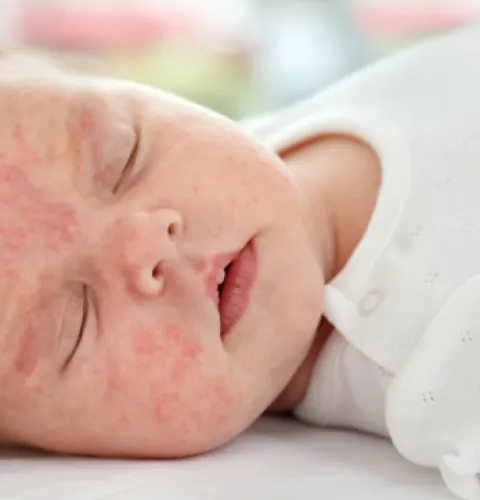
The skin is the largest organ of the human body and, in newborns, it plays a key role in the transition from the watery environment of the womb to the air after birth.
Until your baby is 24 months old, their skin is not the same as that of adults or older children. At birth, the skin is very sensitive and fragile, going through a period of adaptation to its new environment.
Most skin changes in babies are physiological, meaning they are normal, and transient. However, they are a source of worry for parents and a common reason for visits to paediatric A&E.
Today I'm bringing you two very common changes in the neonatal period: erythema toxicum neonatorum and neonatal acne.
Erythema toxicum
Erythema toxicum neonatorum is extremely common, occurring in up to 50% of babies, regardless of sex or ethnicity. It is rare in premature babies and in newborns weighing less than 2.5 kg.
It is characterised by small spots resembling insect bites that start on the face and then spread to the trunk and limbs. It does not affect the palms of the hands or the soles of the feet.
It appears between 24 and 48 hours after birth and clears up on its own by 7 days of life.
During the first months of life, babies are exposed to a greater amount of hormones passed on by their mother, especially if they are breastfed.
Neonatal Acne
Neonatal acne is an example of a hormonal change.
Between the second and third weeks of life, a facial rash appears that is very similar to the acne of teenagers and young adults.
Spots appear, some with white heads and pus but no blackheads. These lesions can last up to 3 months and disappear on their own.
What should we do if our babies have erythema toxicum or neonatal acne?
Improve skin hygiene and hydration, using products suitable for newborns. There is no need for medication because, as we have seen, these changes go away on their own.
Article written by Paediatrician Dr Inês Claudino, Paediatrician and founder of the Dona Bebé project.
You can find out more about the project on its Instagram and Facebook.
Going home after the birth can be one of the most symbolic moments of the postpartum period. Prepare for it in the best possible way.
Read more
Breastfeeding after breast cancer is, above all, a story of hope. It is about believing once again in the strength that lives within every woman.
Read more
Comments (0)
Be the first to comment on this article.