






Preparing for the Return Home and Your New Routine with Your Partner
Going home after the birth can be one of the most symbolic moments of the postpartum period. Prepare for it in the best possible way.
Read more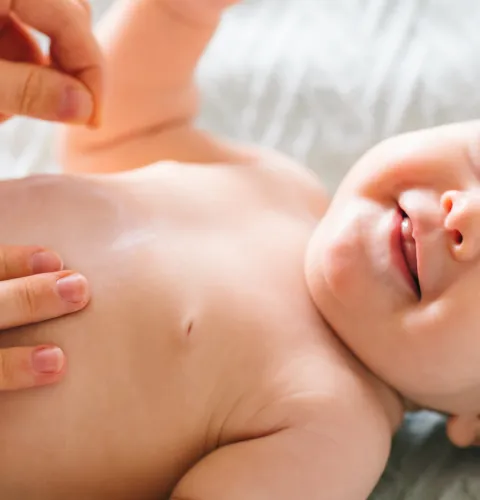
After 9 months protected inside the womb, it is time for a new reality, and questions start to arise about your baby's skin health and care. A newborn's skin is fragile, sensitive, immature and poorly protected, as it has structural and functional characteristics that differ from adult skin, making it unique and special.
Between 2 and 3 years of age, your baby's skin will reach maturity; until then, however, the skin is more permeable, which means a greater tendency towards dryness and, consequently, greater susceptibility to irritation.
For this reason, a newborn's skin needs specific, tailored care from day one, with the main aim of respecting the skin's natural protection and compensating for the needs that are reduced. To do so, you need to use suitable dermocosmetic care to preserve the integrity of the skin and minimise irritation, since damaged skin is more susceptible to developing conditions and infections, such as atopic dermatitis.
What is atopic dermatitis?
Atopic dermatitis, or atopic eczema, is a chronic, inflammatory and itchy skin disease that affects more than 20% of children worldwide, making it the most common skin condition in babies, and it may be associated with respiratory diseases such as asthma and allergic rhinitis.
Babies with atopic dermatitis develop red, dry, itchy patches on the skin, located on the face, scalp, legs and arms. It most often appears between the second and third month of life and tends to disappear during childhood.
If you notice symptoms in your baby such as irritability, dry skin, redness, spots and difficulty sleeping, know that there is a way to soothe your baby's symptoms. Choose products from Uriage's Xemose Bébé range, designed for dry, atopic-prone skin, which restore hydration and nourishment to your baby's skin and help reduce inflammatory signs such as itching and redness.
10 recommendations from Laboratórios Dermatológicos Uriage Portugal to relieve the symptoms
A quick bath, preferably a shower, with lukewarm water (33 to 34ºC).
A fragrance-free shower gel specifically for dry, atopic-prone skin.
Pat the skin dry with a soft cotton towel without rubbing, drying the skin folds very well.
After the bath, apply a moisturising cream specifically for dry, atopic-prone skin, such as an emollient cream or a hypoallergenic, fragrance-free balm.
Clothing in contact with the body should be cotton; avoid synthetic fibres and wool.
Do not use tight clothing or wrap your baby up too warmly, to avoid overheating and sweating, which trigger itching.
Avoid very hot, dry and polluted environments.
Trim nails frequently to stop them causing injuries when your baby scratches.
When washing clothes, avoid products containing bleach and fabric softeners.
Keep your home well ventilated, avoiding airborne allergens such as dust mites.
Look after your baby's skin!
Article written by Mariana Pinto de Sousa, Pharmacist specialising in dermocosmetics at Laboratórios Dermatológicos Uriage
Going home after the birth can be one of the most symbolic moments of the postpartum period. Prepare for it in the best possible way.
Read more
Breastfeeding after breast cancer is, above all, a story of hope. It is about believing once again in the strength that lives within every woman.
Read more
Comments (0)
Be the first to comment on this article.