






Postnatal Mental Health: Recognising the Signs and Taking Care
An article by clinical psychologist Ana Beatriz Sousa explaining the importance of mental health after giving birth.
Read more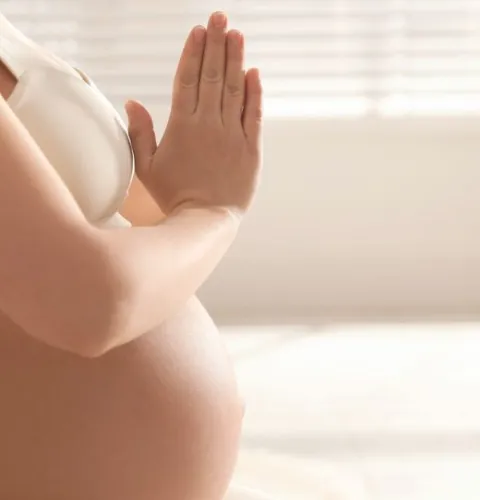
Yoga is one of the oldest and most effective practices available for improving human health, awareness and connection. Yoga postures, breathing and relaxation exercises, meditation and other yoga techniques can be adapted during pregnancy to help you feel fit, more confident and calm, and can even help you prepare physically and emotionally for birth and life after birth.
It is a safe and beneficial method for mum and baby, strengthening your ability to love and bond with your baby, for a fuller, healthier and happier pregnancy. At the same time, the baby who 'practises' yoga inside mum's tummy is better able to develop harmoniously, benefiting from mum's greater balance, serenity, energy, positive thoughts and emotions.
At conception, the genetic programmes in the mother's and father's DNA are passed on to your baby's very first cell. But science shows that, during pregnancy, these programmes can be switched on or off, or even modified, depending on the quality of the emotions and reactions the mother experiences, as well as the quality of the environment around her. When a woman is pregnant, her experiences become information that her baby organises for its own physical and psychological development, and this information is recorded in every one of its cells.
We now understand that a mother's responsibility goes far beyond the physical bond (what she should eat and drink, not smoking, etc.) and extends to the quality of what her mind experiences: her thoughts, her emotions and her own view of the outside world.
Mothers who experience anxiety, stress, frustration and depression during pregnancy are more likely to lack connection and bonding with their baby, which affects life in the womb, the baby's development and even labour and the postpartum period.
That is why it is so important for mums to learn the ways and have the tools to bring body and mind into harmony, giving their baby the best start in life.
Benefits of practising yoga during pregnancy
You can start as soon as your doctor recommends it.
It helps you get through the physical, energetic, hormonal and emotional changes of pregnancy more calmly;
It improves your flexibility and muscle strength, now that you have to carry more weight with your constantly growing baby;
It acts as an antidote to stress, sadness and irritation, calming the nervous system, which is closely linked to your baby's survival, through meditation, positive visualisation, breathing and relaxation exercises, bringing back calm and tranquillity during and after your yoga practice;
It acts on the organs, tissues and glands and on the circulatory, lymphatic and immune systems, toning them and optimising their functions, bearing in mind that during pregnancy a woman has more blood to purify, and these systems are under pressure from the lack of space and the extra activity;
It helps the mum-to-be experience her pregnancy with more happiness and confidence, increasing her sensitivity and inner dialogue with her baby;
It helps with emotional and physical recovery after birth and with continuing the bond with your baby.
Although yoga cannot guarantee a quick, natural birth, pregnant women who practise yoga have greater body awareness, can benefit from having practised the breathing exercises so they do them almost automatically, and relax more easily and quickly. You also develop positive emotions and intuition, enjoying each moment in a clearer, healthier and happier way.
What to expect from a pregnancy yoga class
There are different styles of yoga, and you should take care to avoid the more strenuous yoga practices, even if this is not your first time doing yoga.
The classes include breathing exercises to prepare for birth, deep relaxation techniques for mum and baby, yoga postures specially adapted to the different stages of pregnancy, and moments of meditation and stillness that calm the mind's usual daily chatter and focus you on your positive emotions and on your baby. You feel an inner transformation as the communication and connection between the two of you is encouraged.
At the end of each class, you should feel refreshed, relaxed, more connected with yourself, your body and your baby, with an overall sense of wellbeing.
Are there special safety guidelines for yoga during pregnancy?
If this is your first time practising, remember that you are in a very special and particularly transformative phase of your life, so take extra care, listen to your own body and your baby, and do not ignore any feeling of discomfort or strain.
Every sigh of relief should be seen as a signal from your body, even if you are used to practising yoga.
Article written by Yoga Teacher and Prenatal Educator Susana Lopes,
Founder of the Yoga e Maternidade project
An article by clinical psychologist Ana Beatriz Sousa explaining the importance of mental health after giving birth.
Read more
Getting back into exercise after giving birth can be a challenge. This article answers the most common questions.
Read more
Comments (0)
Be the first to comment on this article.