






Postnatal Mental Health: Recognising the Signs and Taking Care
An article by clinical psychologist Ana Beatriz Sousa explaining the importance of mental health after giving birth.
Read more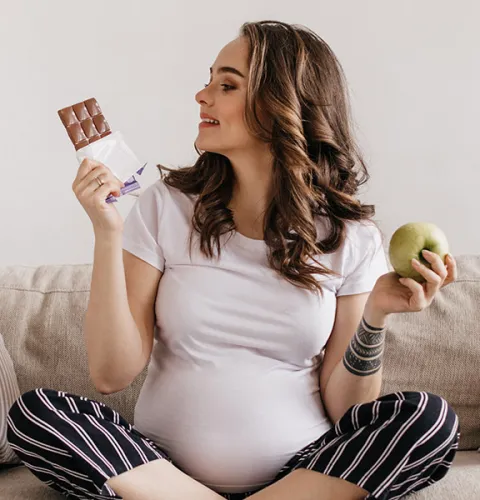
Many women have cravings during pregnancy. It is common to hear of pregnant women waking up in the middle of the night ready to devour a huge bar of chocolate or a whole packet of biscuits, or with a strange craving, such as for soil, soap, ice, charcoal…
Many say the cravings are more frequent in the afternoon and evening.
But why do pregnant women get cravings? The truth is that, even today, the scientific community is divided on the matter.
One possible explanation for pregnancy cravings is the hormonal fluctuation in the mum's body. Some professionals point to nutritional deficiencies, since all of the pregnant mum's nutrients are shared with the baby. However, none of these hypotheses has been scientifically proven to date, which is why professionals' opinions differ so widely.
Beta-hCG and progesterone, the hormones that regulate pregnancy, can alter mums-to-be's mood, appetite, sense of smell and taste. That is why, as well as cravings, it is common for a pregnant woman's sense of taste and smell to change. These hormones alter the pH of the mouth and heighten the mum's sensitivity to smells and tastes. With these hormonal changes, many pregnant women start to crave foods they didn't like before, or to reject foods, smells or perfumes that never bothered them.
Although there is no set time for this to happen, it is from around the 12th week of pregnancy that hormonal control passes to the placenta and the characteristics of oestrogen change, which can trigger or intensify these changes in taste and smell.
In some cases, nutritional deficiencies can also spark rather curious cravings in mums-to-be. There are cases where vegetarian patients, for example, feel an uncontrollable urge to eat red meat, often because of iron deficiency.
More unusual and eccentric cravings, such as the urge to eat soil or brick, may also be linked to mineral deficiencies. In these cases, it is important to have guidance from a professional who can advise you and prescribe vitamin or mineral supplements, if needed.
The food we eat releases dopamine, serotonin and endorphins, substances that create pleasure and lift the mood of the expectant mum, which can be unstable during pregnancy.
Even without a scientific explanation for these sometimes eccentric urges during pregnancy, most cravings and aversions turn out to be more curious and even funny than serious, and generally shouldn't be a cause for concern.
As you can see, cravings in pregnancy are very common and, in most cases, don't point to any health problem. But remember that a healthy, balanced diet during pregnancy is very important for the health of mum and baby!
Always talk to your doctor about any doubts or questions you may have, so you can get the right guidance and, if necessary, look into the causes of the more unusual cravings.
What about you – did you have any cravings? Tell us all about it!
Article written by Dr Michelle Sister, General Practitioner and Dermatologist
An article by clinical psychologist Ana Beatriz Sousa explaining the importance of mental health after giving birth.
Read more
Getting back into exercise after giving birth can be a challenge. This article answers the most common questions.
Read more
Comments (0)
Be the first to comment on this article.