






Postnatal Mental Health: Recognising the Signs and Taking Care
An article by clinical psychologist Ana Beatriz Sousa explaining the importance of mental health after giving birth.
Read more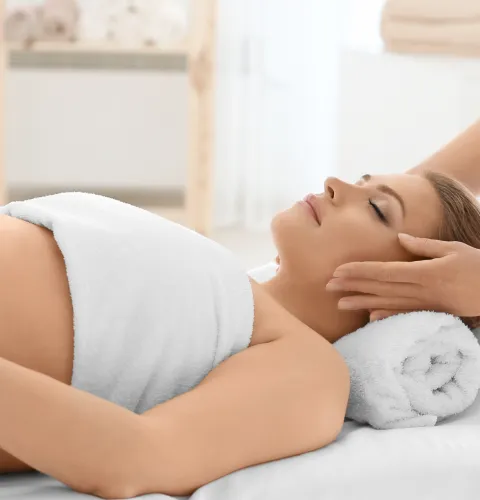
Massage is a pleasant way of connecting with a pregnant woman, bringing moments of wellbeing and relaxation, and it can ease some musculoskeletal aches and/or discomfort that may be present.
What matters is that, when you use this kind of service (therapeutic massage, relaxation massage, manual lymphatic drainage), you make sure you do so with a specialised professional who knows the normal physiological changes of each trimester of pregnancy.
Precautions
Take particular care if you are in the first trimester of pregnancy or if you have been diagnosed with a high-risk pregnancy.
In both cases, you should see your obstetrician and let them know you intend to have one of these massages.
Tip for massage at home
Use a pilates ball (if you don't have one, you can lean on the sofa or the bed). Get into a comfortable, relaxed position.
Ask someone to give you a massage:
some pressure with the hands, making only small outward circles;
slide from the back round to the bump;
go back to making some circles on the back, keeping a pressure that feels pleasant for you (this can also be done on the hips to help ease any discomfort).
Please note: do not make any movements over the spine.
Article written by Joana Rodrigues, Physiotherapist specialising in Maternal and Child Health and founder of the Origem project
An article by clinical psychologist Ana Beatriz Sousa explaining the importance of mental health after giving birth.
Read more
Getting back into exercise after giving birth can be a challenge. This article answers the most common questions.
Read more
Comments (0)
Be the first to comment on this article.