






Postnatal Mental Health: Recognising the Signs and Taking Care
An article by clinical psychologist Ana Beatriz Sousa explaining the importance of mental health after giving birth.
Read more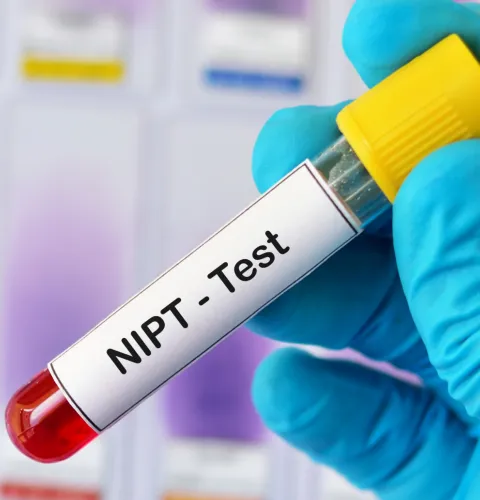
This type of test can detect certain fetal abnormalities by analysing the fetal DNA present in the mother's blood, without resorting to invasive tests/procedures during pregnancy.
We are referring, for example, to amniocentesis, which involves inserting a needle into the uterus and collecting amniotic fluid to study the baby's cells suspended in it; or to chorionic villus sampling, which is the removal of a small sample of the placenta. Invasive tests, although carried out by specialists, still carry risks for the pregnancy. For this reason, they should only be considered when the risk of chromosomal abnormalities is judged to be high.
If a non-invasive prenatal screening result shows an increased risk of a given aneuploidy, and the parents have expressed a wish to terminate the pregnancy, confirmation by an invasive test is essential.
Without any kind of screening, around 1 in every 700 babies is born with Down syndrome. This condition causes intellectual disability, which can range from moderate to severe, and may cause cardiovascular and gastrointestinal malformations, among others.
What can it detect?
This test can detect the following conditions:
TRISOMIES
• Trisomy 21 (Down syndrome): the most common trisomy, resulting from a genetic change in which chromosome pair 21 has one more chromosome than it should, a condition that can cause specific learning difficulties and some
physiological and facial changes;
• Trisomy 18 (Edwards syndrome): this condition has a high rate of miscarriage. Babies who survive birth have significant congenital anomalies such as intellectual disability, short stature, severe microcephaly, heart disease and low-set malformed ears, among others;
• Trisomy 13 (Patau syndrome): an abnormality caused by an extra chromosome 13 and characterised by brain malformations (holoprosencephaly), facial dysmorphism, eye abnormalities and severe psychomotor delay, among others.
SEX CHROMOSOME ANEUPLOIDIES
• Turner syndrome: absence of an X chromosome in females;
• Klinefelter syndrome: an extra copy of the X chromosome in males;
• Triple X syndrome (XXX); Around one in every 1,000 girls is born with a third X chromosome. Triple X syndrome rarely causes obvious physical abnormalities. Girls with triple X syndrome may have slightly below-average intelligence, problems with verbal skills and more difficulties at school than their brothers and sisters. Sometimes the syndrome causes irregular periods and infertility.
• Jacobs syndrome (XYY); Around one in every 1,000 boys is born with XYY syndrome. Boys with XYY syndrome tend to be tall and have language difficulties. Their intelligence quotient (IQ) tends to be slightly lower than that of other family members. Learning difficulties, attention deficit hyperactivity disorder and behavioural disorders can occur.
IDENTIFYING THE BABY'S SEX
X or Y chromosome, even at an early stage of pregnancy.
Article written by the BebéVida Team, Umbilical Cord Blood and Tissue Stem Cell Laboratory
BabySafe - The new Non-Invasive Prenatal Test
An article by clinical psychologist Ana Beatriz Sousa explaining the importance of mental health after giving birth.
Read more
Getting back into exercise after giving birth can be a challenge. This article answers the most common questions.
Read more
Comments (0)
Be the first to comment on this article.