






Postnatal Mental Health: Recognising the Signs and Taking Care
An article by clinical psychologist Ana Beatriz Sousa explaining the importance of mental health after giving birth.
Read more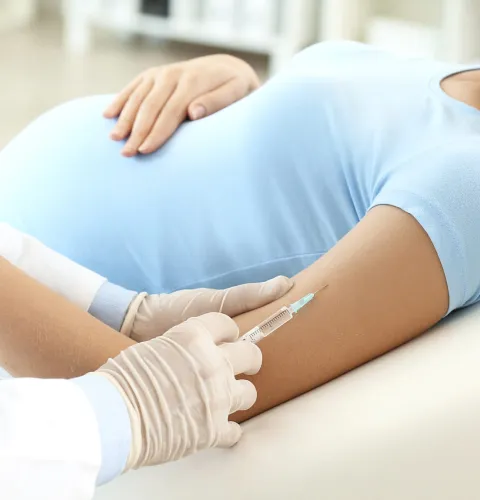
Pregnancy in itself brings great moments of joy, but also questions and insecurities. As vaccination is such a sensitive topic today, it is important that couples are well informed about the importance of having the whooping cough vaccine during
pregnancy.
When given to a pregnant woman, the vaccine also provides protection against two other diseases: tetanus and diphtheria.
Whooping cough (pertussis) is an infectious disease of the respiratory tract caused by the bacterium Bordetella pertussis, with a high risk of transmission through inhaling the respiratory droplets that an infected person releases into the air when coughing and sneezing.
Most cases detected in Portugal occurred in babies under 2 months old (42%), in other words those who had not yet started vaccination, followed by the 2 to 5 months age group (32%). The vast majority of children under one year old were
admitted to hospital (95%), some of them to intensive care units. The disease was fatal or left serious after-effects only in babies under 2 months old.
Symptoms of whooping cough
In the early stage, the disease can be mistaken for a common cold, with a blocked and runny nose, mild fever, dry cough and sneezing. The disease progresses as the cough gets worse, coming in very intense fits during which the person
struggles to breathe and their face turns "red", and may even turn "blue" from lack of oxygen. Large amounts of mucus may also be brought up, and the effort of coughing can cause vomiting. The effort of trying to breathe often makes the
person make a characteristic "whooping" sound.
The illness can last up to three months, with the coughing fits gradually becoming less intense and less frequent, and it can be treated with appropriate antibiotics.
How can whooping cough be prevented?
The National Vaccination Programme includes free vaccination for children at 2, 4, 6 and 18 months, plus a "booster" dose at 5 years of age and another for all pregnant women, in every pregnancy. There is a
rapid drop in the level of antibodies passed on by the mother during pregnancy, which is why keeping to the children's vaccination schedule is essential. There is, however, a small chance of catching the disease even if you have been vaccinated or have had the disease before.
Nurses who follow pregnancies and/or work in vaccination are familiar not only with the scientific basis for this vaccine, but also with answering any questions the expectant couple may have about it.
When in pregnancy the vaccine should be given, and why
The rise in this disease is linked to the emergence of new variants of the bacterium and to the decline in each person's immunity, which naturally happens over the course of life.
Babies up to 2 months old are particularly vulnerable to infections, because their immune system is still developing the ability to defend itself against invading agents, so the younger the child, the more severe the disease.
Vaccination should take place at the point in pregnancy when the transfer of antibodies is highest, that is between 20 and 36 weeks of gestation, ideally by 32 weeks. After 36 weeks of gestation, the baby is considered to have only indirect protection against
the disease, simply by preventing the disease in the mother. Family members in contact with the baby may therefore be a source of infection.
The anomaly scan (recommended between 20 weeks and 22 weeks and 6 days) should already have been carried out before vaccination, to ensure that foetal development is, for the most part, already complete.
It is essential to repeat the vaccination in every pregnancy, as the level of antibodies in the mother's body decreases over time; this ensures that each baby receives the mother's antibodies against this disease. The mother will also have additional protection,
regardless of how long it has been since her last tetanus and diphtheria vaccine or her last vaccine that also covers whooping cough (given, for example, in a previous pregnancy).
Possible side effects of the vaccine
The whooping cough vaccine is perfectly safe, with no risk to the mother or the baby.
The most common reactions associated with the vaccine are pain, warmth, swelling and redness at the injection site. Fever is less common, but it can occur and cause tiredness in the pregnant woman. Taking paracetamol to prevent these signs and symptoms is not recommended, as it may interfere with the body's immune response. Paracetamol can be used to treat fever and local symptoms that occur after vaccination.
How can I get the vaccine?
The nurses and doctors who monitor your pregnancy are the best-placed professionals to answer the questions of the expectant couple/pregnant woman, and to refer them so that they are vaccinated in good time.
Key points to remember:
Whooping cough is a highly contagious disease that is more severe the younger the child.
The early symptoms can be mistaken for minor illnesses, which makes transmission more likely and treatment later.
Vaccinating the mother against whooping cough is safe for both her and the baby, and it is the only way to reduce the number of cases in babies who have not yet started their routine vaccination schedule.
Nurses and doctors are the specialised, qualified professionals to answer pregnant women's questions about vaccination.
Article written by Nurse Maria João Silva, Specialist in Maternal Health and Obstetrics
An article by clinical psychologist Ana Beatriz Sousa explaining the importance of mental health after giving birth.
Read more
Getting back into exercise after giving birth can be a challenge. This article answers the most common questions.
Read more
Comments (0)
Be the first to comment on this article.