






Postnatal Mental Health: Recognising the Signs and Taking Care
An article by clinical psychologist Ana Beatriz Sousa explaining the importance of mental health after giving birth.
Read more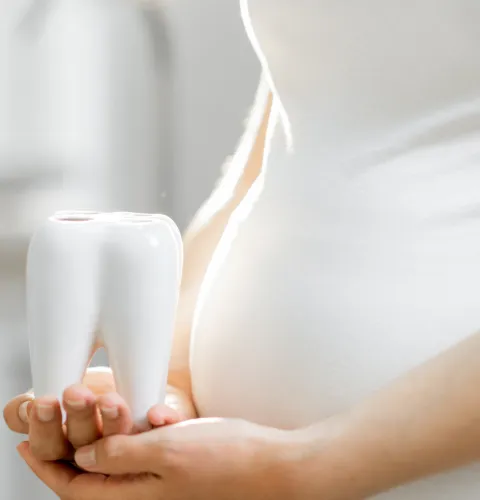
If it is not properly looked after, Oral Health in pregnancy can have quite serious consequences for the baby. That is why you should take even more care of your teeth than usual during pregnancy.
Tips
Choose a soft toothbrush
Especially during pregnancy, when your gums are more sensitive, do not use hard toothbrushes. Remember that brushing your teeth does not mean scrubbing them at all costs, and protect your enamel and gums.
Use a fluoride toothpaste
There are many toothpastes on the market. So make sure you use the one recommended by your Dentist and that it contains fluoride, which is essential for preventing tooth decay.
Don't forget to floss
Flossing is the only way to effectively remove food debris from between your teeth. In this way, it also helps prevent tooth decay and gum inflammation. You should floss once a day, before brushing. But be careful when you do it: your gums are more sensitive in pregnancy, so floss gently to avoid cuts or injury to the area.
Clean your tongue
To finish the job and clean your whole mouth, don't forget to brush your tongue as well. Do it gently, from the back to the tip, removing the bacteria that build up there.
Questions answered by the Portuguese Dental Association (Ordem dos Médicos Dentistas)
Does pregnancy weaken the teeth and therefore increase the risk of tooth decay?
No. During pregnancy, existing poor oral health may get worse, but pregnancy on its own does not increase the incidence of tooth decay.
Do your teeth weaken during pregnancy because calcium is lost to the baby?
No. The calcium in the mother's teeth is in a stable, crystalline form and is not available to the systemic circulation.
Do the gums bleed more during pregnancy?
Yes. Because of hormonal changes, the gums can become sore and bleed easily, and this gets worse without proper oral hygiene.
What medication can be taken for toothache?
Never self-medicate. A pregnant woman should see a Dentist so that the right medication can be prescribed or the appropriate dental treatment carried out to resolve the pain.
Can a pregnant woman have any kind of dental treatment?
Yes. Even if it requires anaesthesia. An oral infection is more harmful to the baby than dental treatment. Ideally, you would see a dentist before pregnancy to avoid oral infections during this period. Appointments should be short, preferably in the morning, and the second trimester of pregnancy is the most suitable time.
How can a pregnant woman's oral hygiene affect the baby's wellbeing?
Oral hygiene is the most effective preventive measure against infections of the oral cavity. The mother can pass on to the baby micro-organisms from infectious diseases such as tooth decay and periodontal disease.
See your dentist regularly. If you are pregnant, it is even more important that you do. And don't forget to smile!
Article written by the Mamãs Sem Dúvidas Team, based on the recommendations of the Portuguese Dental Association (Ordem dos Médicos Dentistas)
An article by clinical psychologist Ana Beatriz Sousa explaining the importance of mental health after giving birth.
Read more
Getting back into exercise after giving birth can be a challenge. This article answers the most common questions.
Read more
Comments (0)
Be the first to comment on this article.