






Postnatal Mental Health: Recognising the Signs and Taking Care
An article by clinical psychologist Ana Beatriz Sousa explaining the importance of mental health after giving birth.
Read more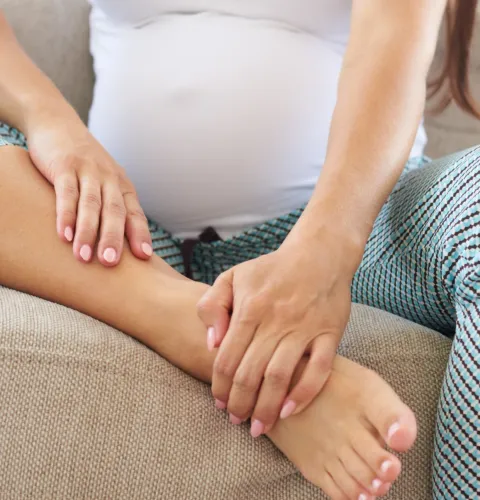
Pregnancy brings countless physiological changes, some of which can cause discomfort.
Mainly from the 2nd trimester onwards, you may start to notice signs of swelling, known as gestational oedema, which is a build-up of fluid, mostly in the hands and feet. This build-up is due to the action of progesterone and the veins' difficulty in returning blood to the heart.
But... what can we do to ease the oedema?
Cold water: run the shower over your limbs or even immerse them in cool water (at a temperature you find comfortable);
Raise your limbs: use pillow(s) to keep your legs raised whenever you are resting, and try not to let your arms hang down all the time;
Movement: muscle movement works as a pump that boosts venous return. It should, however, be controlled and not excessive. For example: a 20-minute gentle walk each day. Keep moving your limbs, even if it's just pointing and flexing your toes and opening and closing your fingers;
Avoid staying in the same position for long: whether standing or sitting. Remember the previous tip: movement matters and should be controlled, just like rest! Change position regularly;
Compression stockings: these are an option to discuss with the health professional following your pregnancy, as they may not be right for everyone;
Manual lymphatic drainage: a massage with light, gentle strokes that helps the body reabsorb the oedema. As well as being a solution, it gives you a moment of relaxation and overall wellbeing.
Article written by Joana Rodrigues, Physiotherapist specialising in Maternal and Child Health and founder of the Origem project
An article by clinical psychologist Ana Beatriz Sousa explaining the importance of mental health after giving birth.
Read more
Getting back into exercise after giving birth can be a challenge. This article answers the most common questions.
Read more
Comments (0)
Be the first to comment on this article.