






Preparing for the Return Home and Your New Routine with Your Partner
Going home after the birth can be one of the most symbolic moments of the postpartum period. Prepare for it in the best possible way.
Read more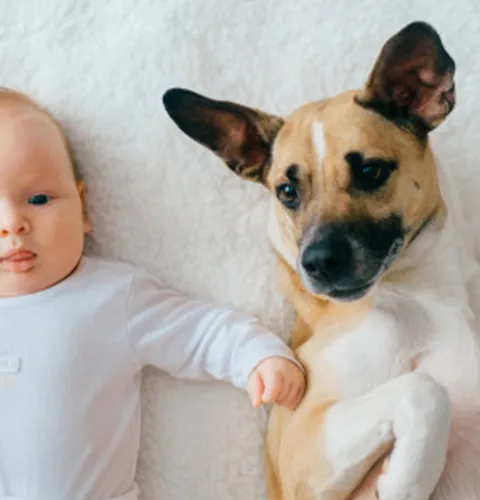
Dogs perceive the world more through smell than sight. Introduce objects with scents typical of baby products. You could bathe your dog with baby shampoo so it gets used to the smell. You could also wash your dog's things, such as its bed and blanket, with baby laundry detergent.
Use a toy baby. It's a good idea to get your dog or cat used to someone being on your lap. When you're playing with your pet, you could hold a baby doll on your lap to gradually teach it that it can't come too close. It's an opportunity to train it without the baby being there, so there's no risk to the child.
While mum is in the maternity unit after the birth, take some of the baby's clothes home and spread them around, so that the baby's scent mixes with familiar smells. That way, when the baby comes home, it will already be recognised as something familiar and there will be less curiosity involved, making it easier to adapt.
It isn't advisable to put your pet in kennels or a pet hotel while you're in the maternity unit. It will come back more anxious and be faced with a new being it doesn't recognise, but which it associates with the fear and stress it has just been through.
When you get home, ask someone to hold the baby while you spend a few moments greeting your pet. Pushing it away while you focus on the baby will cause more anxiety. And, seeking attention, it may become too pushy and inadvertently hurt one of you if the baby is in your arms. The baby should only be introduced once the animal is calm and relaxed. You can keep it under control with a lead or harness. The important thing is that the introduction only happens when everyone is calm and confident, and there should be no shouting at the animal.
NEVER put the baby right in front of the dog's nose. It may feel threatened, and fear could make it react aggressively.
NEVER put your baby at risk to speed things up. Speak gently while encouraging it to come closer, rewarding every bit of progress.
NEVER stroke it after it has shown aggression towards the baby in an attempt to show that you still love it too. It has to understand that if it wants to be part of this extended family, to be present in every situation and to keep everyone's attention, it will have to accept this newcomer.
NEVER correct behaviour aggressively, as the child's presence will inevitably become associated with negative experiences.
If your pet shows aggression or fear around the child, take a few steps back and start the gradual reintroduction again.
Article written by the Mamás Sem Dúvidas Team with advice from Clínica Veterinária Mordomia
Going home after the birth can be one of the most symbolic moments of the postpartum period. Prepare for it in the best possible way.
Read more
As well as being a special moment, the arrival of a baby comes with countless decisions for the parents-to-be.
Read more
Comments (0)
Be the first to comment on this article.