






Postnatal Mental Health: Recognising the Signs and Taking Care
An article by clinical psychologist Ana Beatriz Sousa explaining the importance of mental health after giving birth.
Read more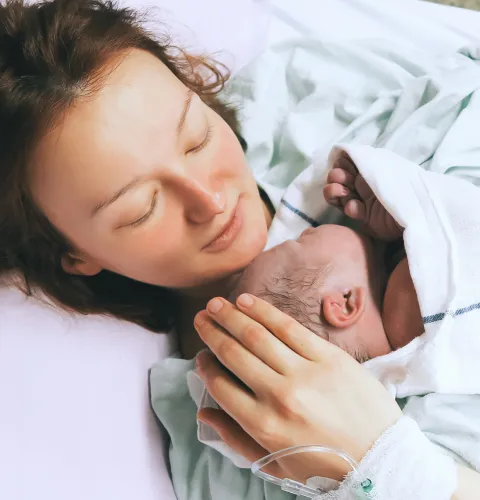
A Positive Birth experience is one a woman remembers with joy, because she felt she was treated with respect, was at the centre of the whole process and was able to express all her wishes.
A Positive Birth experience is one in which a woman felt that she and her baby received the care their wellbeing needed and that, even if it was not the birth she had dreamed of, it was a respectful and humanised birth.
How can you have a positive birth experience?
You should draw up a plan to put into practice during your pregnancy, because this is when preparation for the whole process begins. The plan should aim to reduce your anxiety and the fears you have about birth and motherhood.
Fear of giving birth is with many women, even before they become pregnant. This feeling can have many origins, such as the films and stories each of us has seen and heard at some point in our lives, personal experiences or those of someone we know, or even what we call ancestral fears, such as the fear of death, suffering and loss.
Giving birth has always been associated with pain and suffering.
Feeling fear is not necessarily a bad thing. Fear leads us to seek protection, to look for help, to avoid putting our lives at unnecessary risk. If we felt no fear and, for example, a lion walked into the room we were in, we would not run away and would probably be attacked.
Fear of birth is usually related to having to be in a hospital, being alone without your partner, something happening to the baby, and the fear of suffering, of being in pain, and even of not being able to give birth.
If these feelings are not worked through, they will have a counterproductive effect on you and, very probably, on your relationship with your pregnancy and your birth experience. Even how well your postpartum goes is put at risk.
You should use these fears as a lever to secure your positive birth experience.
What can you do?
It is essential to transform your fears and anxieties, because as your pregnancy progresses and the birth day draws near, you will become more and more frightened and tense, and you will not let your labour flow. This transformation of fear should be done with a qualified professional, a Hypnobirthing therapist, for example, who can help you identify, accept and take apart that fear (or fears).
Find out more
You should learn about pregnancy, birth and the postpartum period, because then you will feel confident in your abilities and will know when to ask for help. You will get to know your body and the changes it goes through while your baby grows and develops. You will know your needs, both physical and emotional, and how to meet them.
Exercise
You should have an exercise plan suited to your pregnancy. Based on my experience, ideally you should choose Yoga classes, because as well as offering physical wellbeing, this practice develops self-awareness and the connection between mum and baby.
Self-awareness through relaxation and meditation will help you find a way to reduce stress and prepare for the day of the birth. You will learn to breathe mindfully and to create different points of focus, which will make all the difference to how you manage pain, making the birth more comfortable and quicker.
This connection between mother and baby:
lets both of you feel safe and strengthens your bond.
makes you aware that something special and wonderful is happening inside you right now, leading you to nurture the wellbeing your pregnancy and your baby need.
makes you more attentive to signs of foetal wellbeing, such as foetal movements, which are an indicator that your baby is well.
helps you listen to your intuition, which will help you decide whether you need, for example, to go to the hospital or even to rest on a particular day instead of going for a walk.
Draw up a Birth Plan
Another part of the plan to achieve your Positive Birth experience is choosing where you will have your baby, as well as working out several possible scenarios for the day of the birth and what to do in each of them – the so-called Birth Plan.
You can only feel safe during birth if you are calm and confident, believing that there, in that place, you will have support, you will have a voice and you will be respected by the professionals who will be with you at this very important stage of your life.
Calm and confidence during labour will let you immerse yourself in the process. You will feel relaxed, allowing your cervix to dilate more easily, and you will be able to believe you are capable of giving birth. They also help keep a good blood supply to your uterus and your hormone production on track, encouraging the contractions you need so much.
More than the birth you dreamed of or imagined, it is important to understand that labour may call for last-minute changes that improve the wellbeing of mother and baby.
When you prepare for these possibilities and are in the place you chose to have your baby and that you trust, you will be able to make informed decisions and will not feel that you were in any way deceived, persuaded to do something you did not want or even a victim of violence.
Have a birth partner
Making sure your birth partner is there gives you a spokesperson, someone who stays with you and acts as a bridge between you and the health professionals. In this preparation for a Positive Birth experience, it is very valuable to involve your birth partner in the whole process: they will understand today's approach to birth, learn pain-management techniques, discover the involvement and closeness they will feel and experience, and realise that simply being there can make all the difference to the birth of this baby and this family.
When you build this whole system of support and the right tools for a successful pregnancy, birth and postpartum, you will certainly have your Positive Birth experience.
Article written by Nurse Telma Cabral, founder of Academia Telma Cabral
An article by clinical psychologist Ana Beatriz Sousa explaining the importance of mental health after giving birth.
Read more
Going home after the birth can be one of the most symbolic moments of the postpartum period. Prepare for it in the best possible way.
Read more
Comments (0)
Be the first to comment on this article.