






Postnatal Mental Health: Recognising the Signs and Taking Care
An article by clinical psychologist Ana Beatriz Sousa explaining the importance of mental health after giving birth.
Read more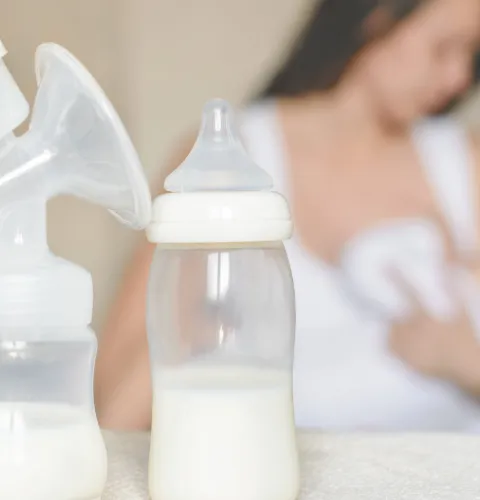
Breast milk is a living substance that adapts to your baby's changing circumstances. So, if your baby becomes ill, your body produces extra white blood cells and antibodies, which travel into your milk and help fight the infection.
Expressed breast milk keeps most of its health benefits, so when you cannot breastfeed your baby at one of the feeds, and as long as hygiene conditions are ensured, you can express, store, freeze and thaw your milk, because it is still better for your baby than any kind of formula milk. But good hygiene is essential to make sure the stored milk is safe for feeding your baby.
Knowing how to store expressed breast milk correctly is essential to make the most of its nutritional and anti-infective qualities. Freshly expressed breast milk is preferable to refrigerated milk, and refrigerated milk is preferable to frozen. This is because freshly expressed breast milk has the best properties for fighting bacteria and a higher content of antioxidants, vitamins and fat than refrigerated or frozen milk.
This information is based on current research and applies to mothers who:
Have healthy full-term babies;
Wish to store their milk for use at home;
Wash their hands before expressing milk;
Use containers that have been thoroughly washed and rinsed.
Guidelines for Safe and Hygienic Storage
To ensure the best conditions for expressed breast milk, follow these guidelines on how to store expressed breast milk safely for healthy full-term babies, and remember that you should refrigerate breast milk as soon as possible after expressing.
If your baby is in a neonatal intensive care unit or a special care baby unit, your
hospital may have stricter recommendations for cleaning and storage.
All milk should be dated before it is stored so that you can monitor and manage the stored milk. Store milk in amounts of about 60 to 120 ml to reduce waste.
You should cool fresh milk by placing it in the fridge before adding it to previously frozen milk, and you should only freeze it if you will not use it within the acceptable fridge storage time, since refrigerated milk has more anti-infective properties than frozen milk.
Article written by Carmen Pacheco, Nurse Specialist in Maternal Health and Obstetrics and founder of the Mãe.Ponto project
An article by clinical psychologist Ana Beatriz Sousa explaining the importance of mental health after giving birth.
Read more
Going home after the birth can be one of the most symbolic moments of the postpartum period. Prepare for it in the best possible way.
Read more
Comments (0)
Be the first to comment on this article.